When you realize your teenager is struggling with substance use, the path forward can feel incredibly stressful. You are not alone; approximately one in six individuals face substance use challenges, and 90 percent begin during youth, according to the Substance Abuse and Mental Health Services Administration. For Iowa families, understanding the landscape of available support serves as the crucial first step toward recovery. Iowa offers multiple levels of care designed to meet young people exactly where they are.
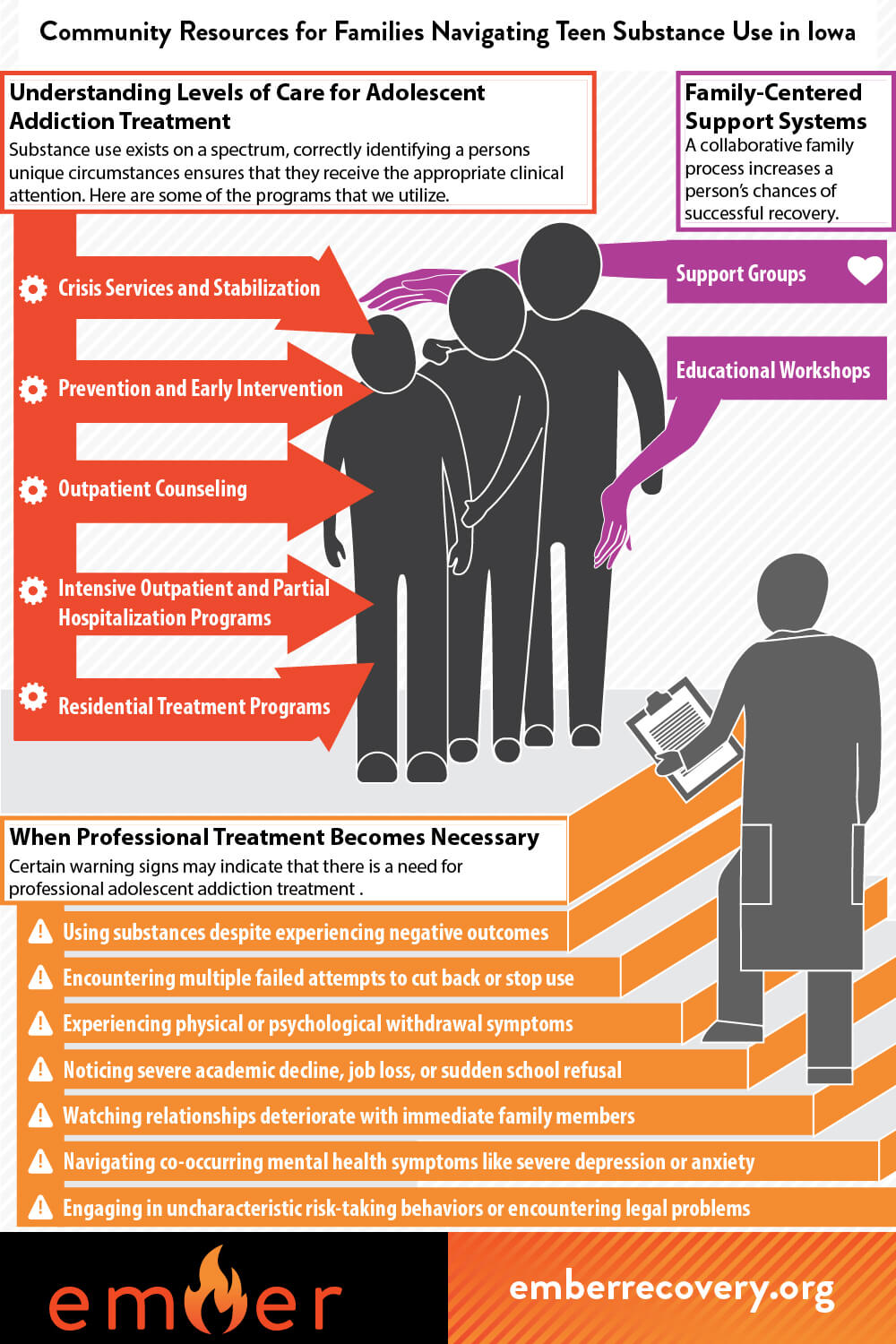
Understanding Levels of Care for Adolescent Addiction Treatment in Iowa
Substance use exists on a spectrum, and support systems are structured to match varying depths of need. Identifying the correct environment ensures the individual receives appropriate clinical attention.
- Crisis Services and Stabilization: For immediate, severe situations involving substance use or co-occurring mental health emergencies, crisis services provide rapid intervention. Mobile crisis units and stabilization centers offer short-term, intensive support to de-escalate emergencies. These teams assess immediate safety concerns and safely connect families to the next appropriate level of care.
- Prevention and Early Intervention: Educational programs through schools, community organizations, and faith-based groups help families recognize warning signs early. Initial counseling, available through county health departments, provides assessments when you first notice concerning behaviors.
- Outpatient Counseling: This framework offers regular therapy sessions while the individual continues living at home. It works well for early-stage concerns or as a step-down transition from more intensive care. Youth drug counseling services throughout the state provide tailored individual, group, and family therapy.
- Intensive Outpatient and Partial Hospitalization Programs: These options provide structured treatment several hours daily. They bridge the gap between weekly counseling and full-time residential care, allowing participants to maintain some normalcy in their routines.
- Residential Treatment Programs: Facilities provide 24/7 supervision, clinical care, and a safe environment removed from negative influences. Programs like those offered at Ember Recovery in Cambridge, IA, specifically tailor intensive programming for teenagers. Integrating a Pacific Northwest-inspired hospitality framework into Midwest treatment, these modern facilities ensure the environment feels welcoming, dignified, and comfortable. For those requiring it, residential teen addiction treatment Iowa programs offer the necessary structure when outpatient approaches have not succeeded.
Family-Centered Support Systems
Recovery is a collaborative family process. Therapy programs strengthen the entire household while addressing the underlying patterns of substance use.
- Support Groups: These networks connect caregivers with other families navigating similar challenges. Peer-led communities offer mutual understanding and practical advice.
- Educational Workshops: These sessions help families understand the neurobiology of addiction and develop communication strategies. Many Iowa drug treatment programs for youth include family education as a core component to strengthen long-term outcomes.
When Professional Treatment Becomes Necessary
Certain warning signs indicate the need for professional adolescent addiction treatment Iowa services:
- Using substances despite experiencing clear negative consequences
- Encountering multiple failed attempts to cut back or stop use
- Experiencing physical or psychological withdrawal symptoms
- Noticing severe academic decline, job loss, or sudden school refusal
- Watching relationships deteriorate with immediate family members
- Navigating co-occurring mental health symptoms like severe depression or anxiety
- Engaging in uncharacteristic risk-taking behaviors or encountering legal problems
If your loved one demonstrates multiple warning signs, reaching out for professional help is an act of courage. Stepping in early creates better outcomes and prevents challenges from deepening further.
Accessing Resources in Your Community
Start by contacting your primary care provider, who can provide referrals and a medical assessment. School counselors also frequently connect families with adolescent treatment programs and community resources.
County health departments maintain up-to-date information about local substance use services and maintain locator tools to help families find appropriate care quickly and safely.
For families near Des Moines and throughout central Iowa, adolescent treatment centers near Des Moines offer comprehensive care that includes dual diagnosis treatment, trauma therapy, and meaningful family involvement throughout the recovery process.
Finding Hope and Support
Since 1976, Iowa families have found healing through comprehensive, compassionate care designed specifically for young people. At Ember Recovery, we have served over 5,000 residential clients, providing individualized, evidence-based support in a safe, homelike atmosphere that empowers each young person to build a healthy future.
Healing starts with hope, and hope starts with reaching out. Our licensed clinicians provide 24/7 supervision and evidence-based care explicitly tailored to adolescents. Contact Ember Recovery today to learn more about how we can support your family’s journey toward recovery and see the difference compassionate, professional care can make.
Andrea Dickerson is a Licensed Therapist and Certified Substance Use Counselor who has worked in behavioral health since 1997. Currently, Andrea is the Director of Behavioral Health, overseeing the Ember residential treatment programs and YSS outpatient counseling clinics throughout Central and North Central Iowa. She became a Motivational Interviewing (MI) trainer in 2006 and provides MI trainings throughout Iowa.
Andrea specializes in working with adolescents and their families and enjoys seeing the family relationships grow through therapy. Andrea is also a CARF International Surveyor, going around North America ensuring behavioral health organizations are meeting required standards.
In her free time, Andrea enjoys cheering on the Iowa Hawkeyes and Chicago Cubs, as well as being an active member of Soroptimist International of the Americas (SIA), a global organization that provides women and girls with access to the education and training they need to achieve economic empowerment. She has been a member of the SI of Des Moines club since 2012 and has been actively involved at the regional level, currently serving as Co-Governor of the Peaks to Plains Region.
Through her involvement in SIA, Andrea has been actively involved in the Dream Programs, coordinating annual Dream It, Be It: Career Support for Girls projects, which give girls the tools they need to achieve their education and career goals, empowering them to break cycles of poverty, violence, and abuse.