When your teen struggles with both substance use and mental health challenges, finding the right treatment approach can feel overwhelming. The reality is that co-occurring disorders (the simultaneous presence of addiction and mental health conditions like anxiety or depression) are far more common than many parents realize. According to SAMHSA, understanding how integrated treatment addresses both issues simultaneously can help you make informed decisions about your loved one’s recovery journey.
Why Co-Occurring Disorders Require Integrated Care
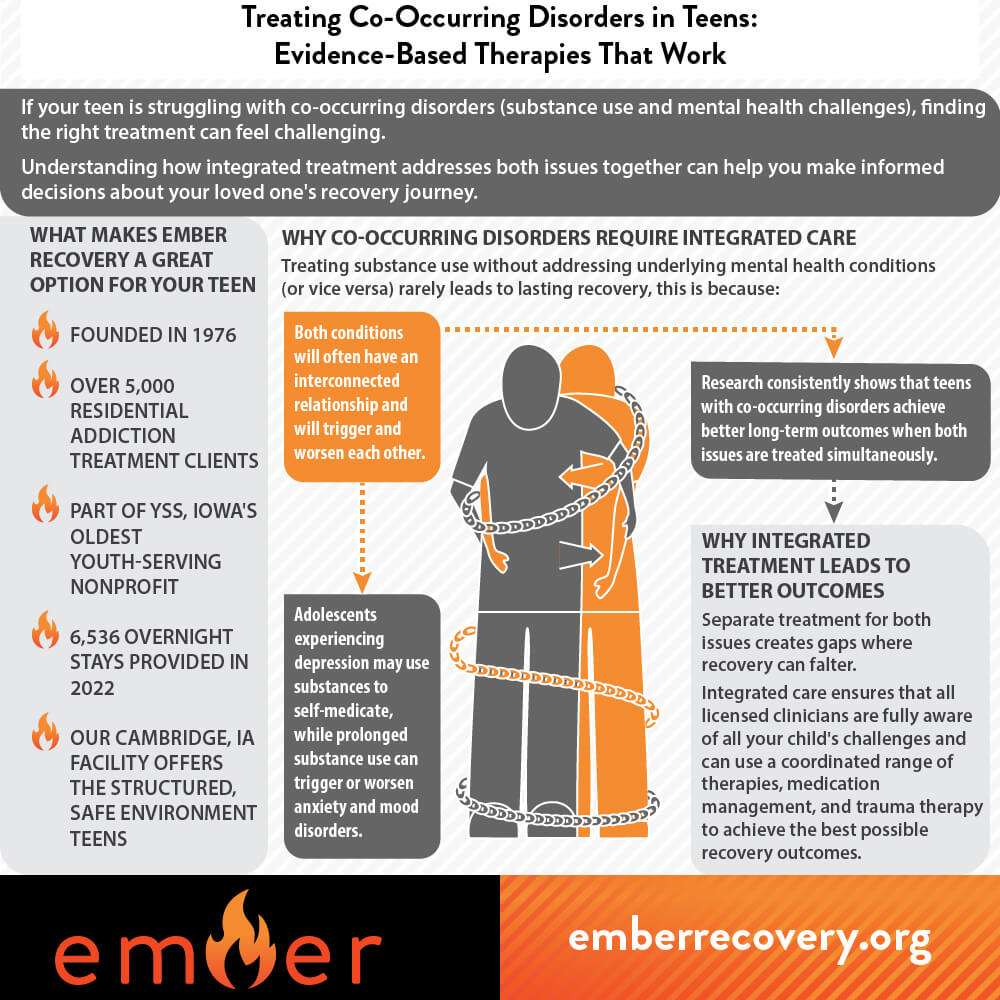
Treating substance use without addressing underlying mental health conditions (or vice versa) rarely leads to lasting recovery. Adolescents experiencing depression may use substances to self-medicate, while prolonged substance use can trigger or worsen anxiety and mood disorders. This interconnected relationship demands treatment that addresses both conditions simultaneously.
At Ember Recovery, our dual diagnosis treatment program recognizes this complexity. With over 5,000 residential addiction treatment clients served since our founding as part of YSS, Iowa’s oldest youth-serving nonprofit, we’ve witnessed firsthand how integrated care transforms outcomes for teens facing co-occurring challenges.
Research consistently shows that teens with co-occurring disorders achieve better long-term outcomes when both conditions are treated together by coordinated care teams. This integrated approach prevents the revolving door of treating one condition while the other continues to fuel relapse and crisis.
Evidence-Based Therapies That Make a Difference
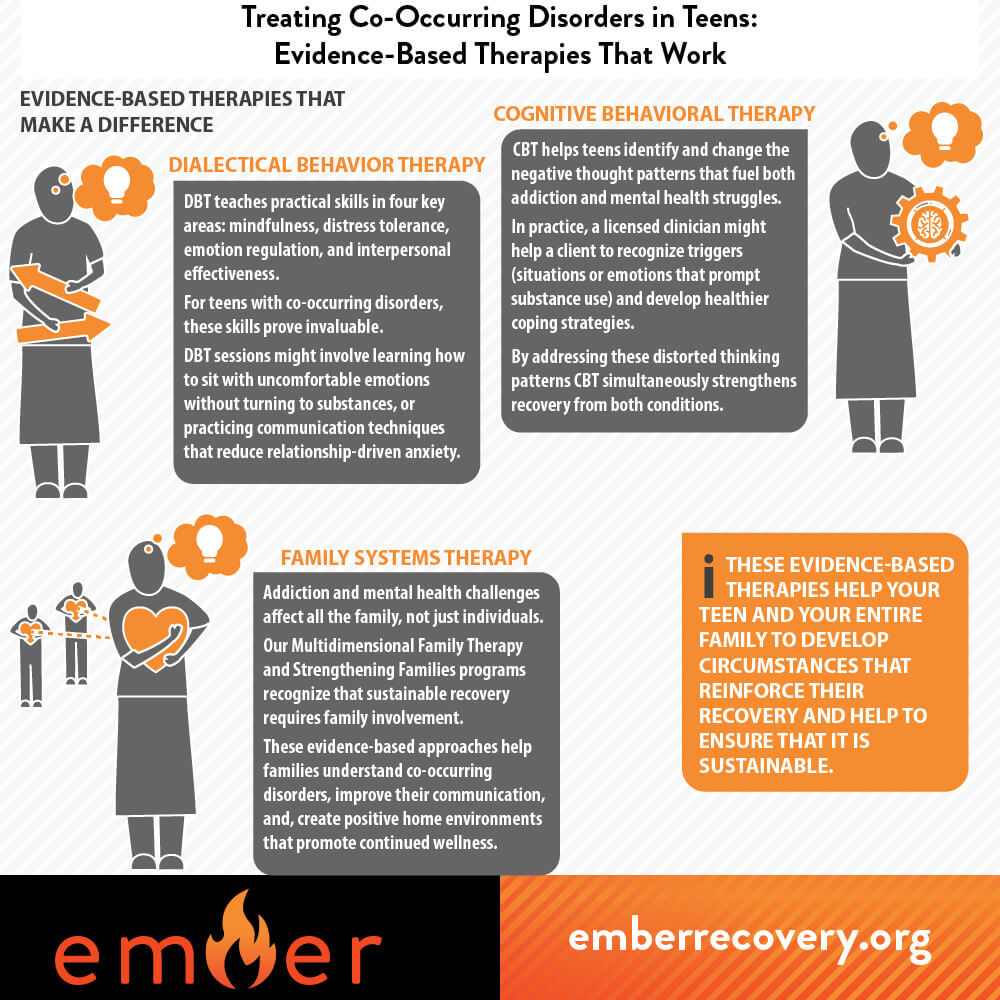
Cognitive Behavioral Therapy (CBT)
CBT helps teens identify and change negative thought patterns that fuel both addiction and mental health struggles. In practice, a licensed clinician might work with a client to recognize triggers (situations or emotions that prompt substance use) and develop healthier coping strategies. Research shows CBT effectiveness. By addressing distorted thinking patterns that contribute to depression or anxiety, CBT simultaneously strengthens recovery from both conditions.
Dialectical Behavior Therapy (DBT)
Originally developed for individuals with intense emotional experiences, DBT teaches practical skills in four key areas: mindfulness, distress tolerance, emotion regulation, and interpersonal effectiveness. For teens with co-occurring disorders, these skills prove invaluable. DBT sessions might involve learning how to sit with uncomfortable emotions without turning to substances, or practicing communication techniques that reduce relationship-driven anxiety.
Family Systems Therapy
Addiction and mental health challenges affect entire family systems, not just individuals. Our Multidimensional Family Therapy and Strengthening Families Program recognize that sustainable recovery requires family involvement. These evidence-based approaches help families understand co-occurring disorders, improve communication patterns, and create supportive home environments that promote continued wellness.
Parents and caregivers learn to recognize signs of both substance use and mental health challenges, while teens develop skills to express their needs effectively. This collaborative approach addresses the isolation that many teens with co-occurring disorders experience.
Why Integrated Treatment Leads to Better Outcomes
Separate treatment for mental health and addiction creates gaps where recovery can falter. Integrated care ensures that all licensed clinicians understand the full picture of your child’s challenges. Our team coordinates care across therapies, medication management when appropriate, and trauma therapy for those whose co-occurring disorders stem from traumatic experiences.
With 6,536 overnight stays provided in 2022 alone, our Cambridge, IA facility offers the structured, safe environment teens need to focus entirely on healing. Our gender-specific programs create developmentally appropriate treatment that resonates with adolescents’ unique needs during this critical stage of development.
Real-World Application at Ember Recovery
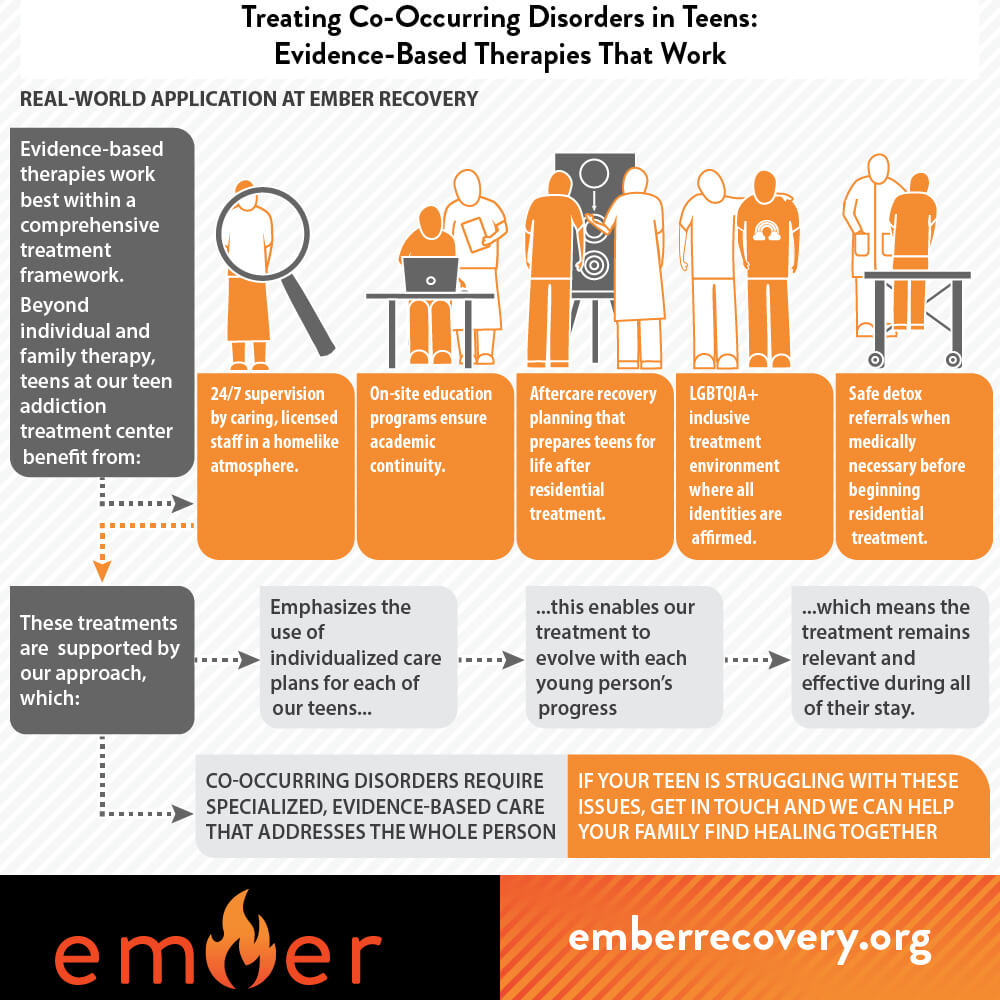
Evidence-based therapies work best within a comprehensive treatment framework. Beyond individual and family therapy, teens at our teen addiction treatment center benefit from:
- 24/7 supervision by caring, licensed staff in a homelike atmosphere
- On-site education programs ensure academic continuity
- Aftercare recovery planning that prepares teens for life after residential treatment
- LGBTQIA+ inclusive treatment environment where all identities are affirmed
- Safe detox referrals when medically necessary, before beginning residential treatment
Our approach emphasizes individualized care plans that evolve with each young person’s progress, ensuring that treatment remains relevant and effective throughout their stay.
Healing Starts With Hope
Co-occurring disorders require specialized, evidence-based care that addresses the whole person. If your teen is struggling with both substance use and mental health challenges, integrated treatment can provide the foundation for lasting recovery and a healthy future.
At Ember Recovery, our licensed clinicians provide 24/7 supervision and compassionate, individualized care in a safe, homelike atmosphere designed to help teens rediscover hope.
Contact Ember Recovery today to learn more about how our comprehensive approach to treating co-occurring disorders at our teen addiction treatment center can help your family find healing and build a brighter tomorrow together.
Source:
[1] https://www.samhsa.gov/substance-use/treatment/co-occurring-disorders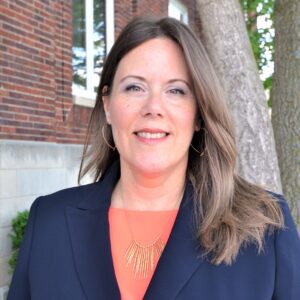
Andrea Dickerson is a Licensed Therapist and Certified Substance Use Counselor who has worked in behavioral health since 1997. Currently, Andrea is the Director of Behavioral Health, overseeing the Ember residential treatment programs and YSS outpatient counseling clinics throughout Central and North Central Iowa. She became a Motivational Interviewing (MI) trainer in 2006 and provides MI trainings throughout Iowa.
Andrea specializes in working with adolescents and their families and enjoys seeing the family relationships grow through therapy. Andrea is also a CARF International Surveyor, going around North America ensuring behavioral health organizations are meeting required standards.
In her free time, Andrea enjoys cheering on the Iowa Hawkeyes and Chicago Cubs, as well as being an active member of Soroptimist International of the Americas (SIA), a global organization that provides women and girls with access to the education and training they need to achieve economic empowerment. She has been a member of the SI of Des Moines club since 2012 and has been actively involved at the regional level, currently serving as Co-Governor of the Peaks to Plains Region.
Through her involvement in SIA, Andrea has been actively involved in the Dream Programs, coordinating annual Dream It, Be It: Career Support for Girls projects, which give girls the tools they need to achieve their education and career goals, empowering them to break cycles of poverty, violence, and abuse.