
When your teenager is struggling with substance abuse, one of the first questions you will ask is how long treatment will take. It is a natural concern, as you want to understand the commitment involved and how to plan for your family’s future. The answer varies based on individual needs, but understanding what shapes the length of stay can help you prepare for the journey ahead.
Typical Length of Stay for Adolescent Residential Treatment
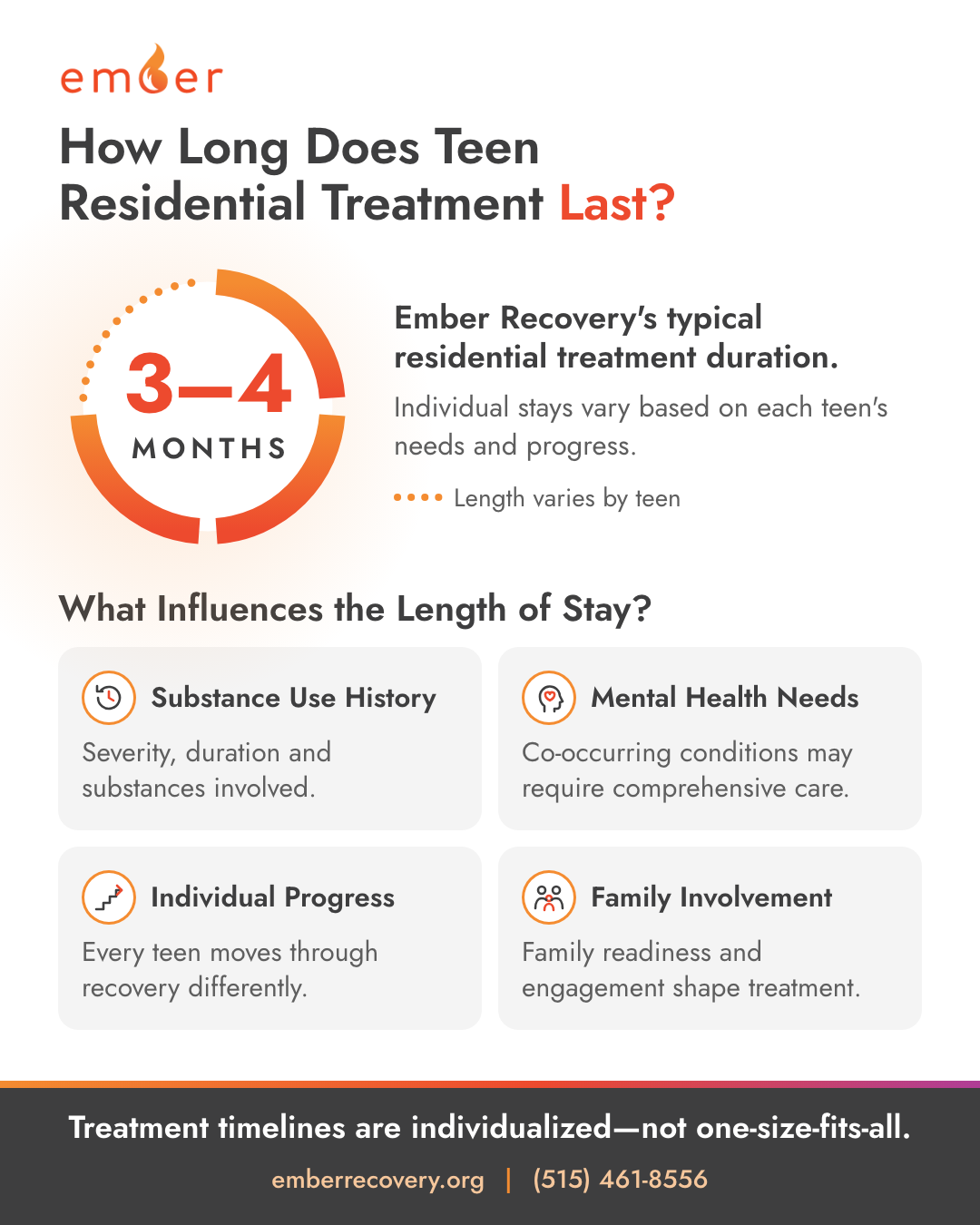
Most adolescent residential treatment programs Iowa families turn to, including Ember Recovery, typically last three to four months. This timeframe allows young people to fully engage in evidence-based treatment, develop coping skills, and build a foundation for lasting recovery.
However, every young person’s journey is unique. Several factors influence how long residential treatment lasts:
- Severity and duration of substance use: Adolescents who have been using substances longer or using multiple substances may need extended support.
- Co-occurring mental health conditions: Dual diagnosis treatment addressing both addiction and mental health conditions like depression or anxiety requires comprehensive care.
- Individual progress: Recovery unfolds at different rates for different people.
- Family readiness and involvement: Strong family engagement often supports more effective treatment outcomes.
The Phases of Residential Treatment
Understanding the stages of treatment helps explain why meaningful recovery takes time.
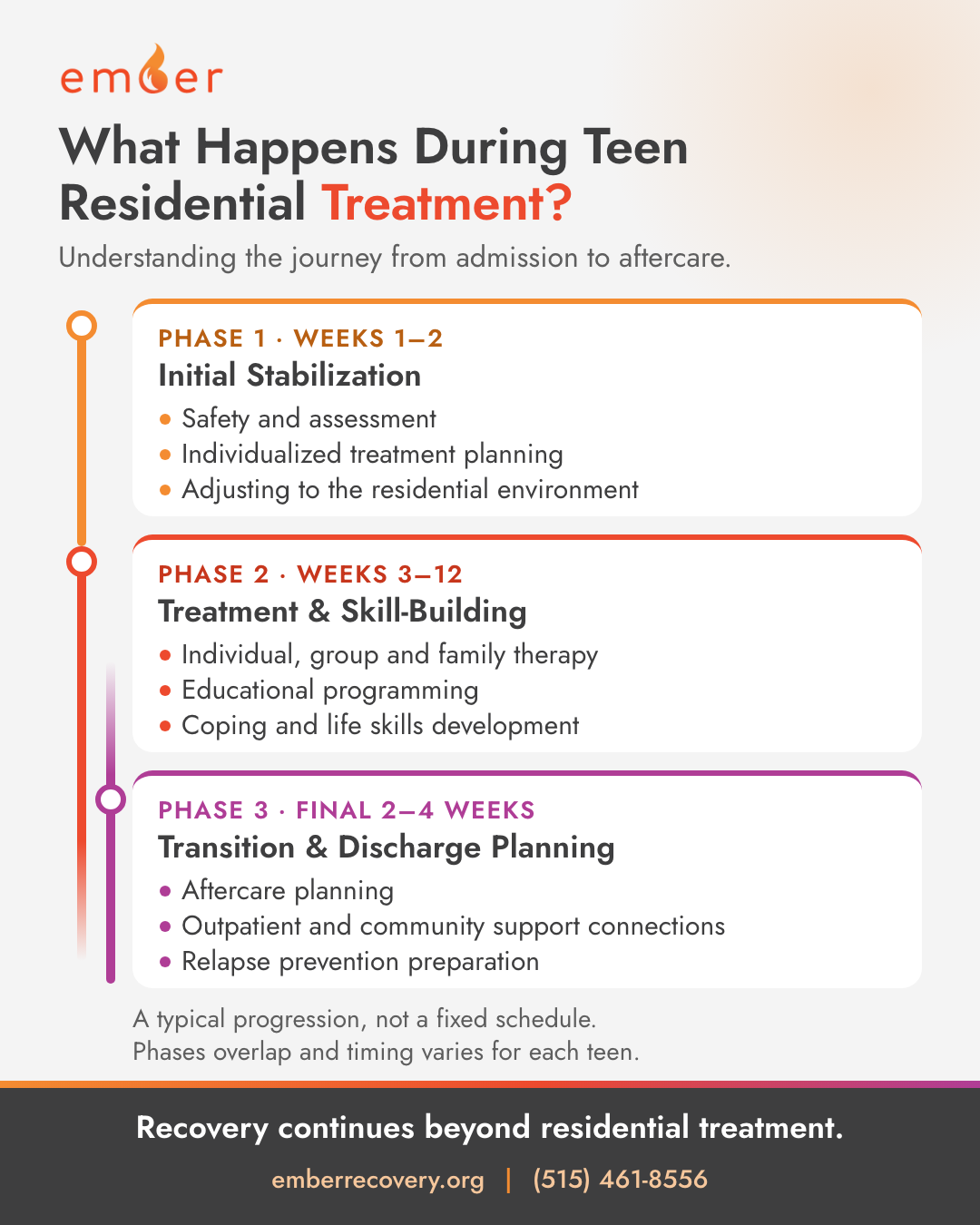
Initial Stabilization (Weeks 1 through 2)
When adolescents first arrive, the focus is on safety, assessment, and adjustment. Ember Recovery provides safe support with continuous supervision from licensed clinicians for teens ages 12 through 17.
During this phase, clinicians complete comprehensive assessments, establish individualized treatment plans, and help young people acclimate to the structured, homelike environment in our gender-specific homes.
Active Treatment and Skill-Building (Weeks 3 through 12)
This is the heart of residential treatment. Young people participate in:
- Individual therapy addressing underlying experiences and triggers
- Group therapy building peer support and accountability
- Family therapy helping repair relationships and strengthen communication
- Educational programming, where youth continue their education in our dedicated campus classrooms, catching up on missed credits with staff coordinating a smooth transition back to their home school
- Life skills development, preparing for healthy, independent futures
At Ember Recovery, evidence-based approaches guide every intervention. With continuous supervision from licensed clinicians, young people have consistent support as they navigate challenges and celebrate victories.
Transition and Discharge Planning (Final 2 through 4 Weeks)
As young people demonstrate progress, treatment shifts toward preparing for life after residential care. Discharge planning includes:
- Developing comprehensive aftercare plans with ongoing support
- Connecting families with community resources
- Establishing outpatient therapy and support groups
- Practicing relapse prevention strategies in real-world scenarios
Why Longer Treatment Often Leads to Better Outcomes
Research consistently shows that longer treatment durations improve long-term recovery success. Here is why immersive, extended care matters for adolescent residential treatment programs Iowa families choose:
- Time to Address Root Causes: Substance use challenges rarely exist in isolation. Many young people navigate mental health challenges, past difficult experiences, or family conflict. Addressing these underlying issues requires time and consistent therapeutic support.
- Opportunity to Practice New Skills: Learning healthy coping mechanisms takes practice. A three-to-four-month stay allows young people to encounter various situations, practice their skills, and receive immediate feedback from licensed clinicians.
- Brain Development Considerations: For adolescents ages 12 through 17, the brain is still developing, particularly areas governing decision-making and impulse control. Extended treatment supports this critical developmental period with structure and guidance.
- Breaking Old Patterns: Returning home too quickly can mean returning to the same environments, peer groups, and triggers. Longer residential stays create distance from these influences while building resilience and new, healthier patterns.
The Role of Aftercare in Continued Success
Residential treatment does not end at discharge. It transitions into ongoing support. At Ember Recovery, aftercare planning ensures young people maintain their progress through:
- Outpatient therapy connections
- Support group recommendations
- Family support resources
- Check-ins and alumni programming
This continuum of care recognizes that recovery is a journey, not a destination.
Take the First Step Toward Lasting Recovery
Since 1976, Ember Recovery, part of YSS, Iowa’s oldest and largest youth-serving nonprofit, has supported over 5,000 young people through evidence-based residential treatment in our Cambridge facility. Our LGBTQIA+ inclusive programs provide a safe, gender-specific, homelike atmosphere where healing starts with hope.
Ready to learn more about our adolescent residential treatment programs Iowa families trust? Contact our admissions team today to discuss your teen’s unique needs and how we can support your family’s journey toward recovery. Your hope for your teenager’s future can become reality, and we are here to help you take that first step together.
