
When a young person struggles with both substance use and mental health challenges, finding the right level of care can feel overwhelming.
While residential treatment provides comprehensive, round-the-clock support, Intensive Outpatient Programs (IOPs) offer a flexible alternative that allows teens and young adults to receive structured, evidence-based care—without stepping away from their daily lives.
Understanding how IOPs address co-occurring disorders can help families make informed decisions about the most effective path to lasting wellness.
What Are Co-occurring Disorders?
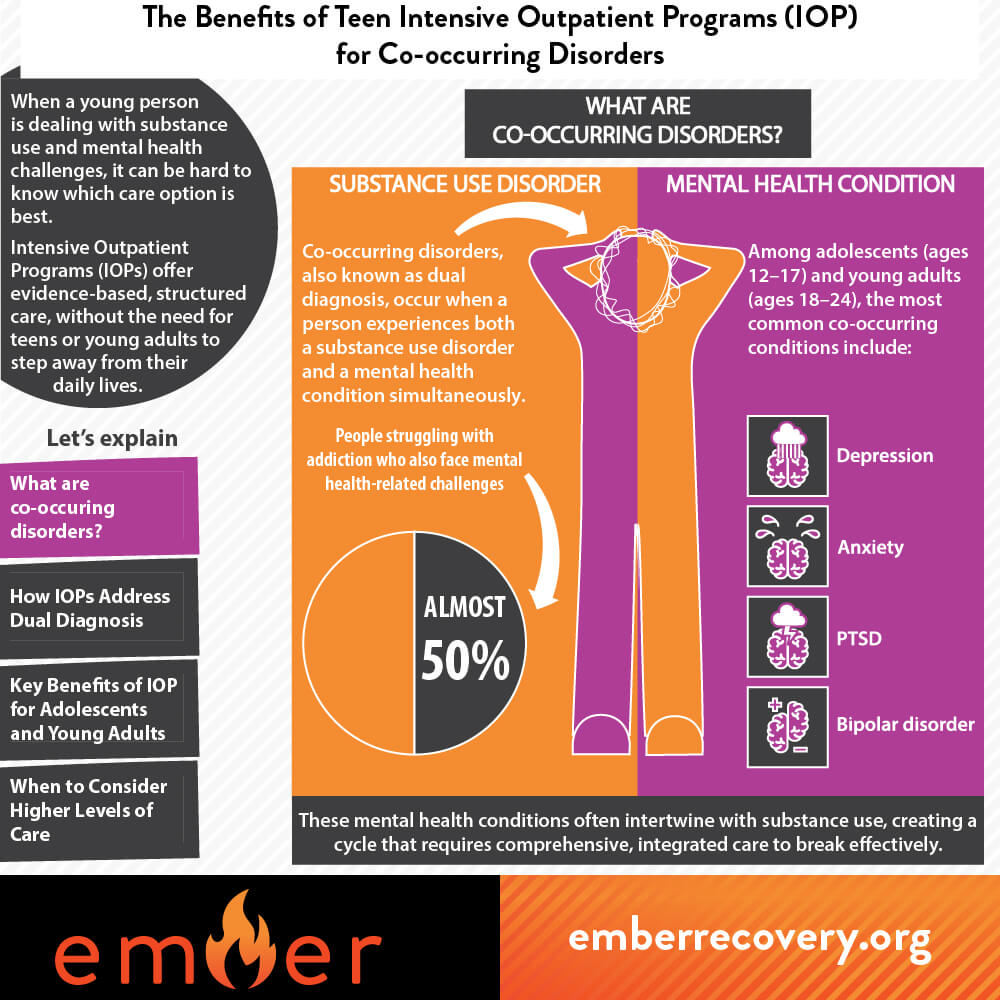
Co-occurring disorders, also known as dual diagnosis, occur when an individual experiences both a substance use disorder and a mental health condition simultaneously.
Research shows that nearly 50% of people struggling with addiction also face mental health-related challenges.
Among adolescents (ages 12–17) and young adults (ages 18–24), the most common co-occurring conditions include:
- Depression
- Anxiety
- Post-Traumatic Stress Disorder (PTSD)
- Bipolar disorder
These mental health conditions often intertwine with substance use, creating a cycle that requires comprehensive, integrated care to break effectively.
How IOPs Address Dual Diagnosis
1. Integrated Treatment Approach
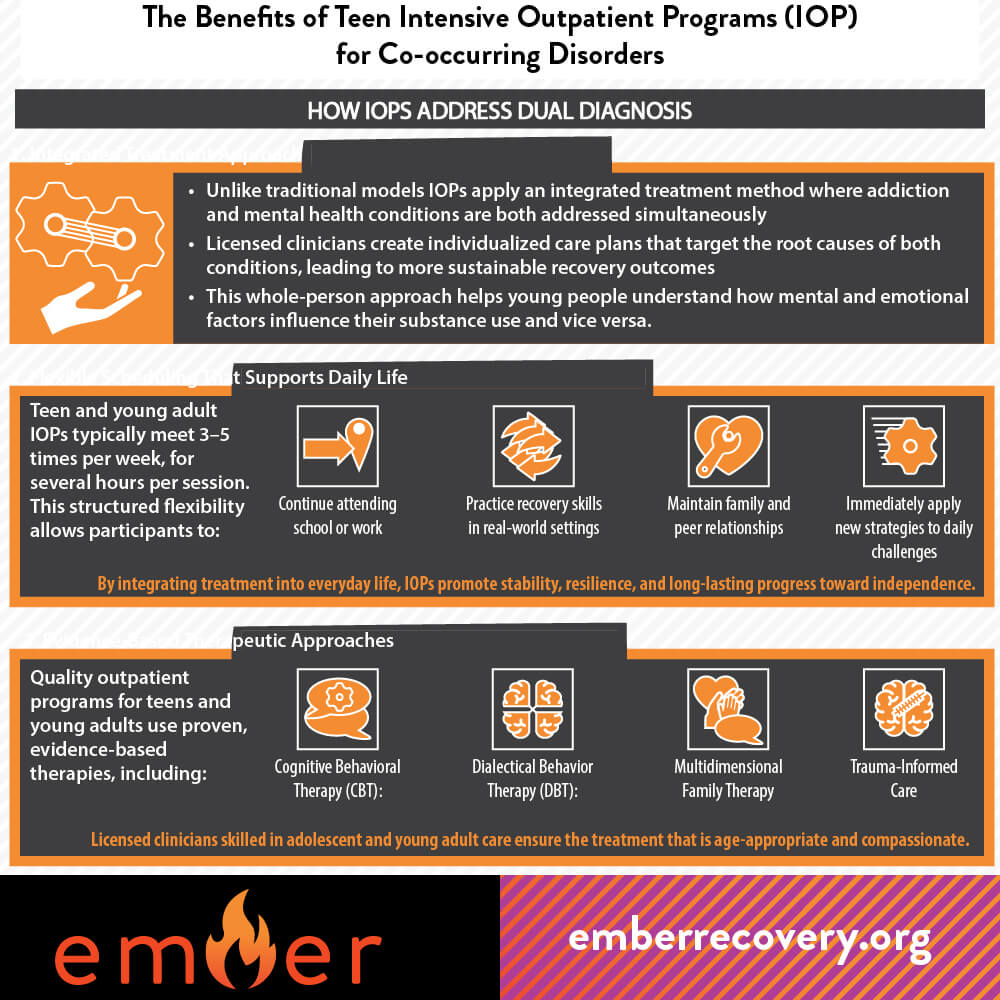
Unlike traditional models that treat addiction and mental health conditions separately, IOPs apply an integrated treatment approach, addressing both simultaneously.
At dual diagnosis treatment centers, licensed clinicians create individualized care plans that target the root causes of both conditions, leading to more sustainable recovery outcomes.
This whole-person approach helps young people understand how mental and emotional factors influence substance use—and vice versa.
2. Flexible Scheduling That Supports Daily Life
Teen and young adult IOPs typically meet 3–5 times per week, for several hours per session.
This structured flexibility allows participants to:
- Continue attending school or work
- Practice recovery skills in real-world settings
- Maintain family and peer relationships
- Apply therapeutic strategies to daily challenges immediately
By integrating treatment into everyday life, IOPs promote stability, resilience, and long-lasting progress toward independence.
3. Evidence-Based Therapeutic Approaches
Quality outpatient programs for teens and young adults use proven, evidence-based therapies, including:
- Cognitive Behavioral Therapy (CBT): Identifies and challenges negative thought patterns tied to both addiction and mental health symptoms.
- Dialectical Behavior Therapy (DBT): Improves emotional regulation, distress tolerance, and interpersonal effectiveness.
- Multidimensional Family Therapy (MDFT): Engages families as partners in recovery, healing strained relationships, and improving communication.
- Trauma-Informed Care: Recognizes the role of trauma in substance use and mental health conditions, promoting safety and empowerment.
These modalities are delivered by licensed clinicians skilled in adolescent and young adult care, ensuring treatment that is age-appropriate and compassionate.
Key Benefits of IOP for Adolescents and Young Adults
1. Continuity of Care
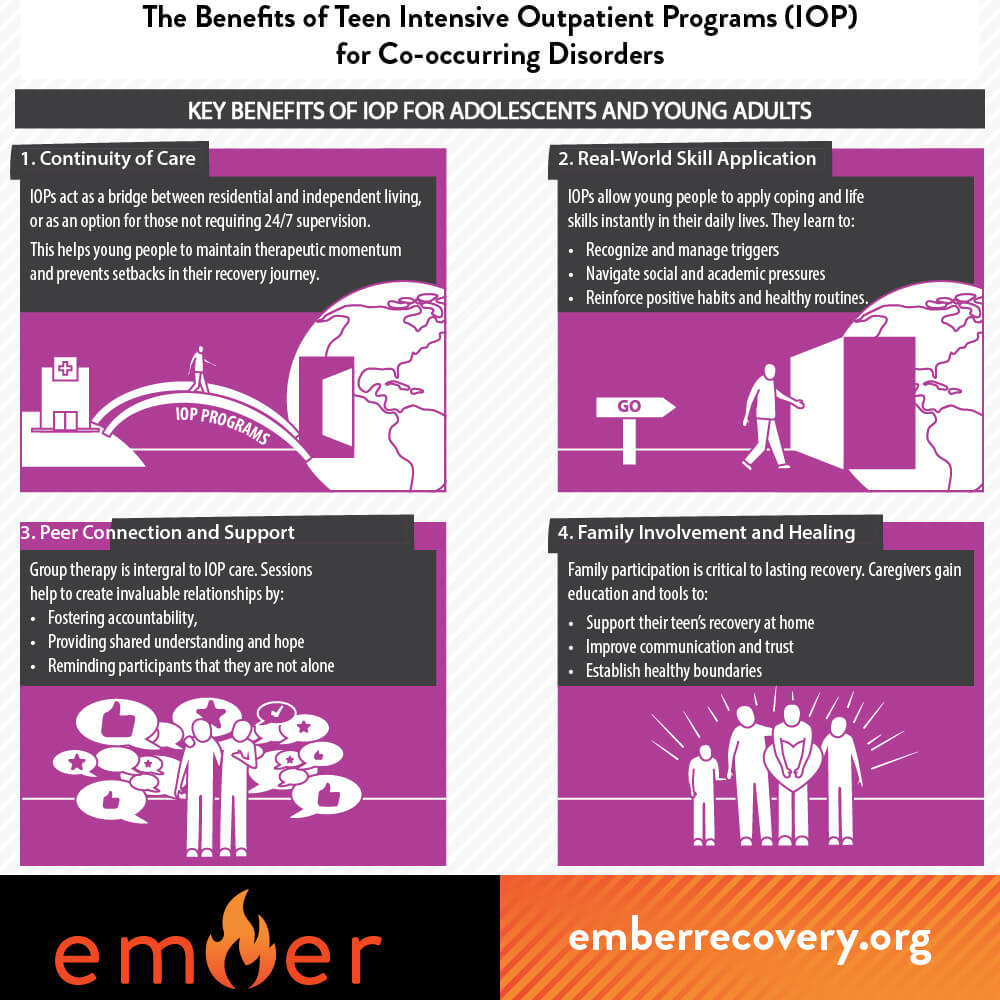
IOPs act as a bridge between residential and independent living, or as a primary treatment option for those not requiring 24/7 supervision.
This continuity helps young people maintain therapeutic momentum and prevents setbacks in their recovery journey.
2. Real-World Skill Application
Unlike inpatient settings that limit exposure to external environments, IOPs allow young people to apply coping and life skills immediately in their daily lives.
They learn to:
- Recognize and manage triggers
- Navigate social and academic pressures
- Reinforce positive habits and healthy routines
3. Peer Connection and Support
Group therapy is a cornerstone of IOP care.
Teens and young adults find peer connections that foster accountability, shared understanding, and hope.
These relationships create a sense of belonging and remind participants that they are not alone on their recovery journey.
4. Family Involvement and Healing
Family participation is critical to lasting recovery.
Through family therapy sessions, caregivers gain education and tools to:
- Support their teen’s recovery at home
- Improve communication and trust
- Establish healthy boundaries
Healing extends beyond the individual—it involves the entire family system working together.
When to Consider Higher Levels of Care
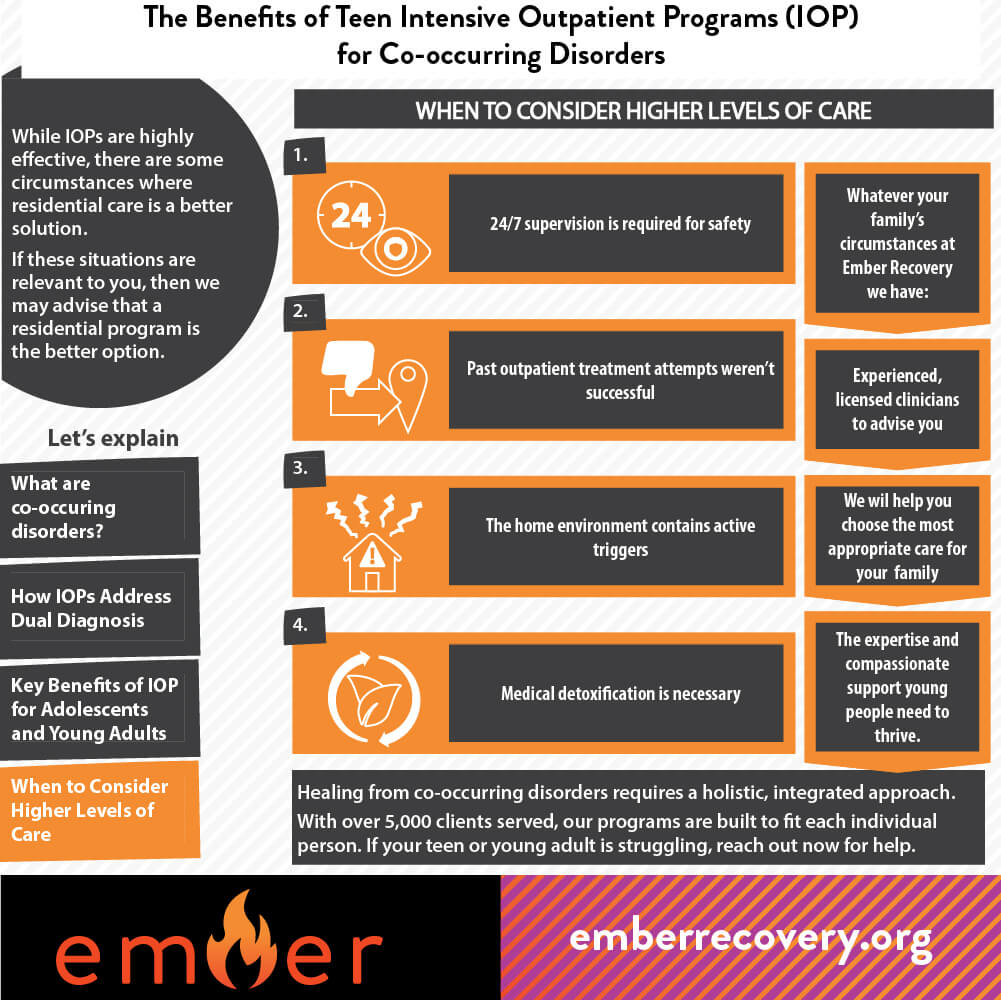
While IOPs are highly effective, some circumstances may warrant residential care instead. Consider a higher level of support when:
- 24/7 supervision is required for safety
- Past outpatient treatment attempts weren’t successful
- The home environment contains active triggers
- Medical detoxification is necessary
At Ember Recovery, families receive guidance from experienced, licensed clinicians who help determine the most appropriate care level for each unique situation.
With over 5,000 clients served, our programs are built around the understanding that recovery is not one-size-fits-all.
Building Healthy Futures Through Comprehensive Care
Healing from co-occurring disorders requires a holistic, integrated approach that addresses both the body and mind.
Whether through Intensive Outpatient Programs or Residential Care at our Cambridge, Iowa location, Ember Recovery provides the professional expertise and compassionate support young people need to thrive.
Our licensed clinicians deliver individualized, evidence-based care in a safe, home-like setting—empowering families and teens to rebuild hope and live healthy, fulfilling lives.
Healing starts with hope—and we’re here to walk alongside your family every step of the way.
Contact Ember Recovery
Take the next step toward lasting wellness. Contact Ember Recovery today to learn more about treatment options for adolescents and young adults facing substance use and co-occurring mental health challenges. Together, we can build a brighter, healthier future for your loved one.
Sources:
[1] https://pmc.ncbi.nlm.nih.gov/articles/PMC4365859/
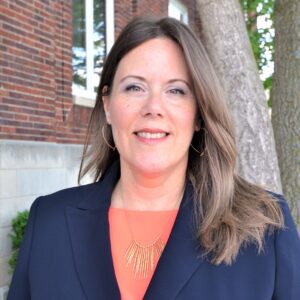
Andrea Dickerson is a Licensed Therapist and Certified Substance Use Counselor who has worked in behavioral health since 1997. Currently, Andrea is the Director of Behavioral Health, overseeing the Ember residential treatment programs and YSS outpatient counseling clinics throughout Central and North Central Iowa. She became a Motivational Interviewing (MI) trainer in 2006 and provides MI trainings throughout Iowa.
Andrea specializes in working with adolescents and their families and enjoys seeing the family relationships grow through therapy. Andrea is also a CARF International Surveyor, going around North America ensuring behavioral health organizations are meeting required standards.
In her free time, Andrea enjoys cheering on the Iowa Hawkeyes and Chicago Cubs, as well as being an active member of Soroptimist International of the Americas (SIA), a global organization that provides women and girls with access to the education and training they need to achieve economic empowerment. She has been a member of the SI of Des Moines club since 2012 and has been actively involved at the regional level, currently serving as Co-Governor of the Peaks to Plains Region.
Through her involvement in SIA, Andrea has been actively involved in the Dream Programs, coordinating annual Dream It, Be It: Career Support for Girls projects, which give girls the tools they need to achieve their education and career goals, empowering them to break cycles of poverty, violence, and abuse.