
Choosing residential treatment for your teen or young adult is one of the most difficult decisions a parent can make. You’re entrusting your child’s well-being to caring professionals during their most vulnerable time. If you’re wondering what actually happens inside an adolescent residential treatment program in Iowa, you’re not alone. Understanding the daily experience can transform uncertainty into hope.
At Ember Recovery, transparency isn’t just a value—it’s essential to build trust with families navigating substance use challenges. Here’s an honest look at what residential treatment actually looks like for adolescents and young adults.
A Day in the Life: What Does Treatment Look Like?
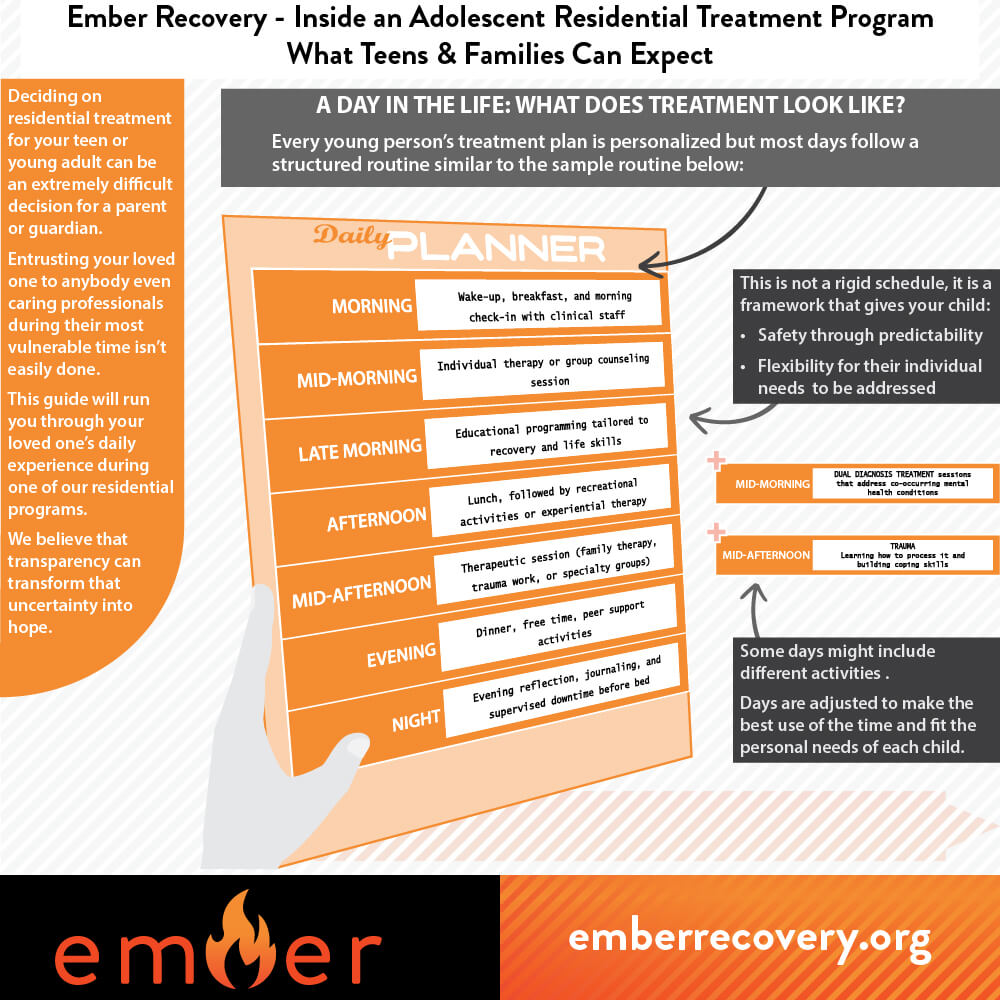
Every young person’s treatment plan is individualized, but most days follow a structured routine that balances therapy, education, skill-building, and healthy recreation.
A Sample Day:
- Morning: Wake-up, breakfast, and morning check-in with clinical staff
- Mid-morning: Individual therapy or group counseling session
- Late morning: Educational programming tailored to recovery and life skills
- Afternoon: Lunch, followed by recreational activities or experiential therapy
- Mid-afternoon: Therapeutic session (family therapy, trauma work, or specialty groups)
- Evening: Dinner, free time, peer support activities
- Night: Evening reflection, journaling, and supervised downtime before bed
This isn’t a rigid schedule—it’s a framework that creates safety through predictability while allowing flexibility for individual needs. Some days include dual diagnosis treatment sessions addressing co-occurring mental health conditions. Others focus on building coping skills or processing trauma.
Safety and Supervision: 24/7 Support
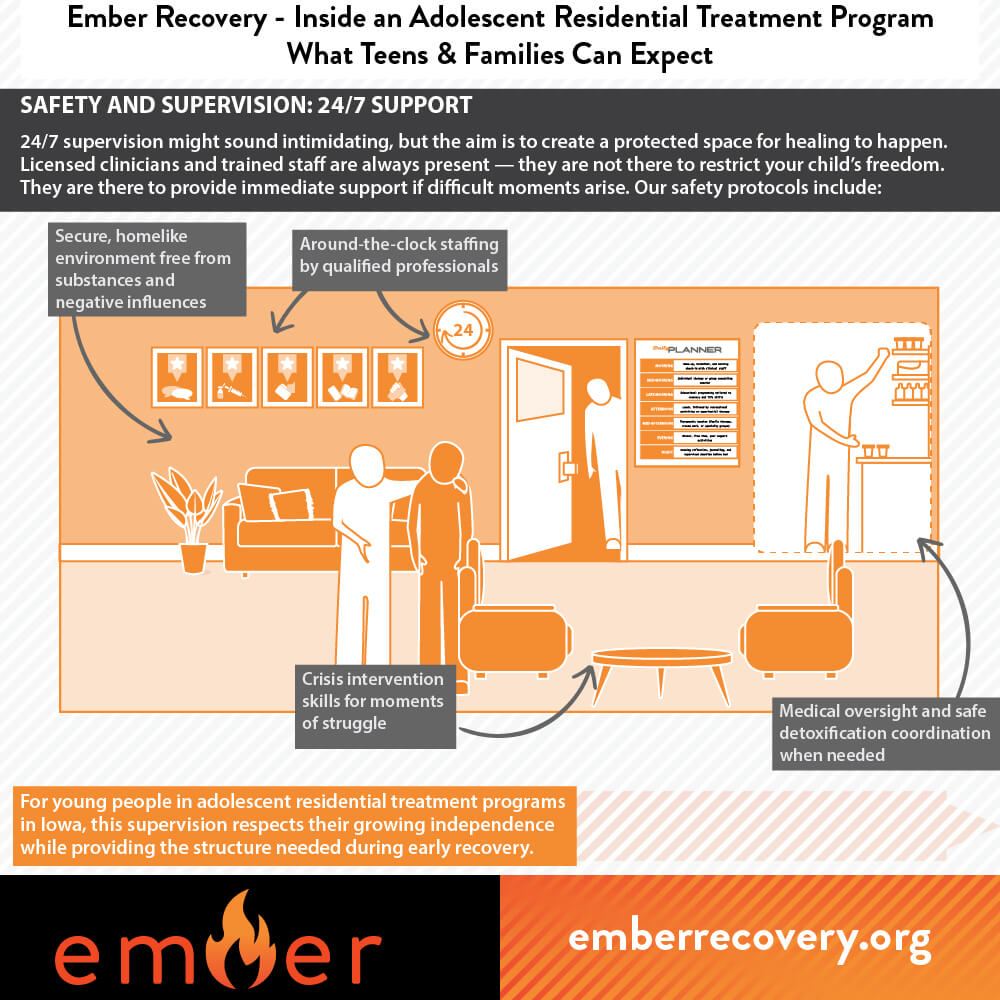
The phrase “24/7 supervision” might sound intimidating, but it’s about creating a protected space where healing can happen. Licensed clinicians and trained staff are always present—not to restrict freedom, but to provide immediate support during difficult moments.
Safety protocols include:
- Around-the-clock staffing by qualified professionals
- Regular wellness checks and emotional support
- Secure, homelike environment free from substances and negative influences
- Crisis intervention skills for moments of struggle
- Medical oversight and safe detoxification coordination when needed
For young people in adolescent residential treatment programs in Iowa, this supervision respects their growing independence while providing the structure needed during early recovery.
The Clinical Team: Who’s Guiding Recovery?
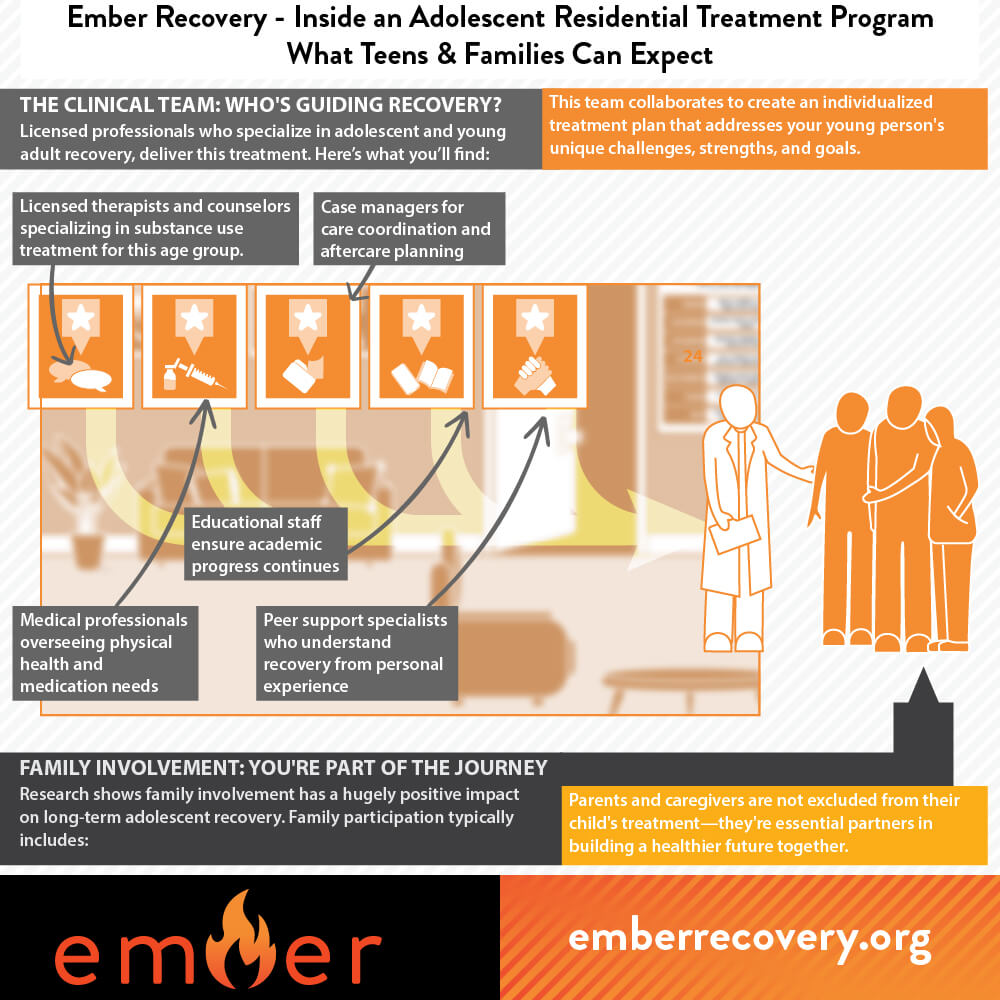
Treatment is delivered by licensed professionals who specialize in adolescent and young adult recovery. At a quality residential treatment center, you’ll find:
- Licensed therapists and counselors specializing in substance use treatment for teens and young adults
- Medical professionals overseeing physical health and medication needs
- Case managers coordinating care and aftercare planning
- Educational staff ensure academic progress continues
- Peer support specialists who understand recovery from personal experience
This team collaborates to create an individualized treatment plan that addresses your young person’s unique challenges, strengths, and goals.
Family Involvement: You’re Part of the Journey
Residential treatment doesn’t separate families—it strengthens them. Research shows family involvement dramatically improves long-term outcomes in adolescent substance use treatment.
Family participation typically includes:
- Regular therapy sessions (in-person or virtual) addressing communication and family dynamics
- Parent education about substance use and recovery
- Weekly updates from clinical staff
- Discharge planning and aftercare support
- Skills training for the whole family
Parents and caregivers aren’t excluded from their child’s treatment—they’re essential partners in building a healthier future together.
Trauma-Informed, Age-Appropriate Care
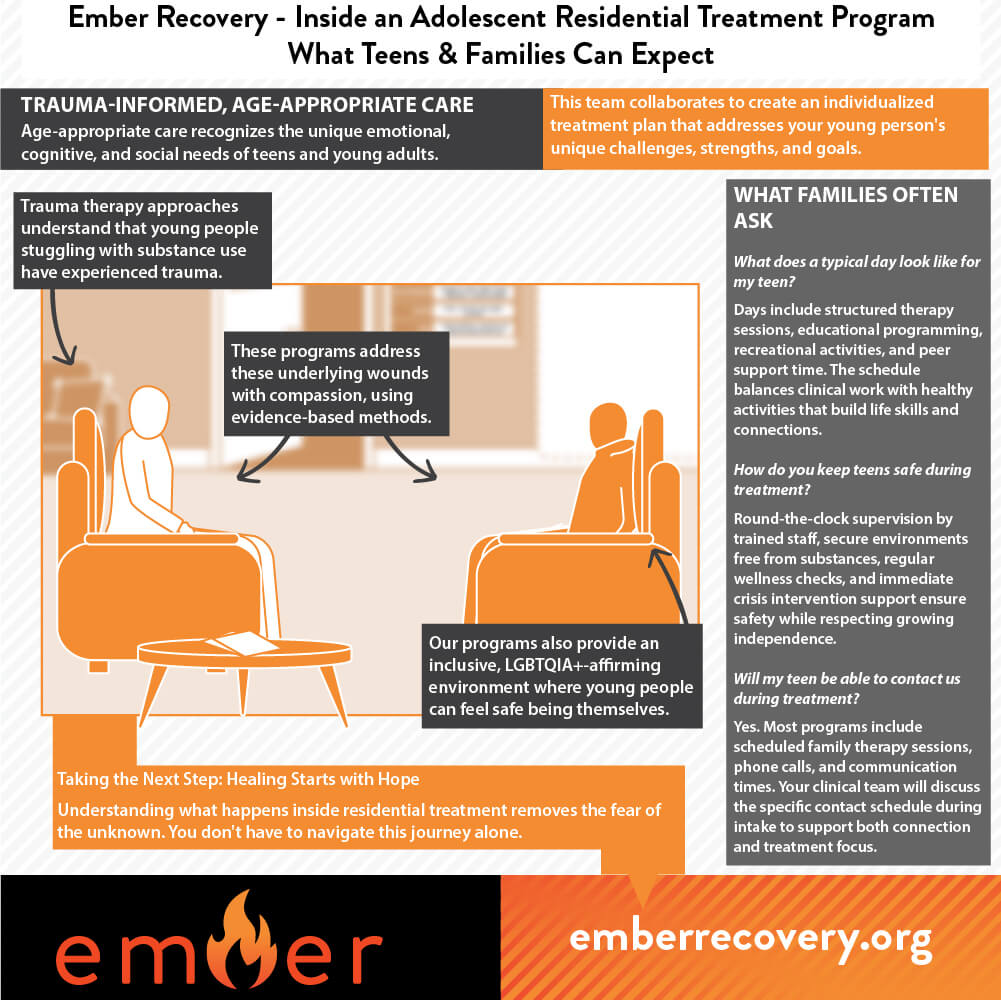
Adolescents and young adults have unique developmental needs. Age-appropriate care recognizes where your teen or young adult is emotionally, cognitively, and socially.
Trauma therapy approaches understand that many young people struggling with substance use have experienced trauma. Treatment addresses these underlying wounds with compassion, using evidence-based methods proven to support lasting recovery.
Adolescent residential treatment programs in Iowa, such as Ember Recovery, also provide an inclusive, LGBTQIA+-affirming environment where every young person can feel safe being themselves during recovery.
What Families Often Ask
What does a typical day look like for my teen? Days include structured therapy sessions, educational programming, recreational activities, and peer support time. The schedule balances clinical work with healthy activities that build life skills and connections.
How do you keep teens safe during treatment? Round-the-clock supervision by trained staff, secure environments free from substances, regular wellness checks, and immediate crisis intervention support ensure safety while respecting growing independence.
Will my teen be able to contact us during treatment? Yes. Most programs include scheduled family therapy sessions, phone calls, and communication times. Your clinical team will discuss the specific contact schedule during intake to support both connection and treatment focus.
Taking the Next Step: Healing Starts with Hope
Understanding what happens inside residential treatment removes the fear of the unknown. You don’t have to navigate this journey alone.
If your teen or young adult is struggling with substance use, Ember Recovery is here to support your family every step of the way. Our licensed clinicians provide evidence-based care in a safe, homelike atmosphere where young people can heal and build healthy futures.
Contact Ember Recovery today to learn more about our adolescent and young adult programs and how we can support your family’s journey toward recovery.
Sources:
[1] https://library.samhsa.gov/sites/default/files/pep20-02-02-016.pdf
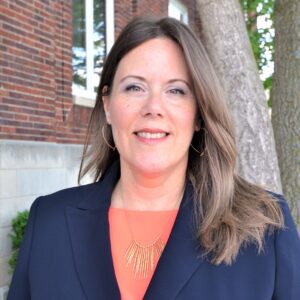
Andrea Dickerson is a Licensed Therapist and Certified Substance Use Counselor who has worked in behavioral health since 1997. Currently, Andrea is the Director of Behavioral Health, overseeing the Ember residential treatment programs and YSS outpatient counseling clinics throughout Central and North Central Iowa. She became a Motivational Interviewing (MI) trainer in 2006 and provides MI trainings throughout Iowa.
Andrea specializes in working with adolescents and their families and enjoys seeing the family relationships grow through therapy. Andrea is also a CARF International Surveyor, going around North America ensuring behavioral health organizations are meeting required standards.
In her free time, Andrea enjoys cheering on the Iowa Hawkeyes and Chicago Cubs, as well as being an active member of Soroptimist International of the Americas (SIA), a global organization that provides women and girls with access to the education and training they need to achieve economic empowerment. She has been a member of the SI of Des Moines club since 2012 and has been actively involved at the regional level, currently serving as Co-Governor of the Peaks to Plains Region.
Through her involvement in SIA, Andrea has been actively involved in the Dream Programs, coordinating annual Dream It, Be It: Career Support for Girls projects, which give girls the tools they need to achieve their education and career goals, empowering them to break cycles of poverty, violence, and abuse.