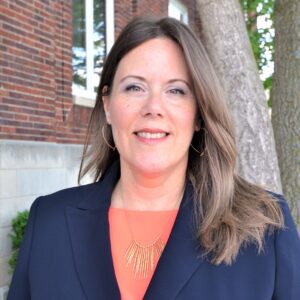
Andrea Dickerson is a Licensed Therapist and Certified Substance Use Counselor who has worked in behavioral health since 1997. Currently, Andrea is the Director of Behavioral Health, overseeing the Ember residential treatment programs and YSS outpatient counseling clinics throughout Central and North Central Iowa. She became a Motivational Interviewing (MI) trainer in 2006 and provides MI trainings throughout Iowa.
Andrea specializes in working with adolescents and their families and enjoys seeing the family relationships grow through therapy. Andrea is also a CARF International Surveyor, going around North America ensuring behavioral health organizations are meeting required standards.
In her free time, Andrea enjoys cheering on the Iowa Hawkeyes and Chicago Cubs, as well as being an active member of Soroptimist International of the Americas (SIA), a global organization that provides women and girls with access to the education and training they need to achieve economic empowerment. She has been a member of the SI of Des Moines club since 2012 and has been actively involved at the regional level, currently serving as Co-Governor of the Peaks to Plains Region.
Through her involvement in SIA, Andrea has been actively involved in the Dream Programs, coordinating annual Dream It, Be It: Career Support for Girls projects, which give girls the tools they need to achieve their education and career goals, empowering them to break cycles of poverty, violence, and abuse.
Many parents worry that their children are addicted to the internet, and rightfully so. Studies show that nearly half of all teenagers admit to using the internet almost constantly.1...
Previously reserved for doctor and veterinarian use, Ketamine has now become a popular party drug among teens. Teen Ketamine abuse is a concern because of the damaging short-term and...
Teen drug use is a serious problem in the United States, as 15% of high school students report having ever used an illicit drug.1 When parents hear statistics like...
A recent survey shows that one-third of teens spend 5 to 6 hours online a day.1 When teens are online, they can be on social media platforms, chatting with...
Statistics show that between 40 and 60 percent of people who undergo treatment for a substance abuse disorder will suffer a relapse at some point.1 Being aware of relapse triggers...
Much growth and development occur physically, mentally, and emotionally during the teen years. Adding teen substance abuse into the mix can negatively impact brain development and functioning skills, leading...
Statistics show that more than 2.6 million children, ages 12-17, use an inhalant every year to get high.1 Inhalants tend to be the drug that children try first and...
If you have a family member returning home after a treatment program for substance abuse, providing a safe environment for them to continue their recovery is important. Without it,...
When your child comes home from a teen drug treatment program, an adjustment period can include getting used to attending social gatherings once again. While this can be awkward...
As restrictions on marijuana use loosen up around the country, many teens, and even some adults, don’t consider weed use a big deal. But it is a big deal....