
When your teen or young adult is struggling with substance abuse, the reality is often more complex than it first appears. Many families discover that addiction isn’t happening in isolation but is intertwined with anxiety, depression, trauma, or other mental health challenges. Suppose you’ve noticed your child self-medicating emotional pain with drugs or alcohol, or watched their mental health deteriorate alongside their substance use. In that case, you’re facing what clinicians call a dual diagnosis.
This co-occurring condition affects the majority of adolescents and young adults seeking addiction treatment, and it requires specialized, integrated care to address both issues simultaneously: dual diagnosis treatment.
What Is Dual Diagnosis Treatment?
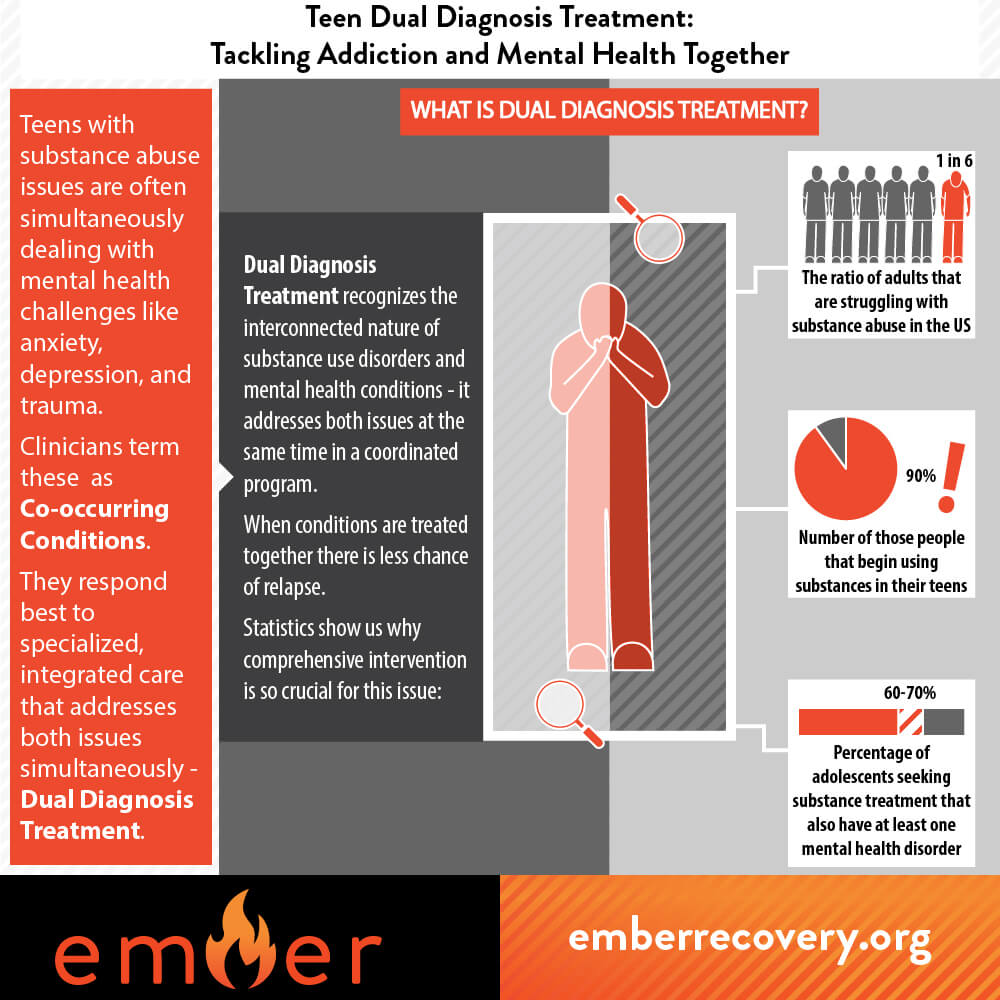
Dual diagnosis treatment is an evidence-based approach that recognizes the interconnected nature of substance use disorders and mental health conditions. Rather than treating addiction and mental health issues separately, which often leads to relapse, dual diagnosis treatment addresses both conditions at the same time, in one coordinated program.
For teens and young adults, this integrated approach is particularly critical. Research shows that 1 in 6 people struggle with substance use, and 90% of those individuals started using as teens. Among adolescents seeking addiction treatment, studies indicate that 60-75% also meet criteria for at least one mental health disorder 60-75% also meet criteria for at least one mental health disorder. These aren’t separate problems occurring by chance; they fuel and reinforce each other in a cycle that requires comprehensive intervention.
How Ember Recovery’s Dual Diagnosis Treatment Works
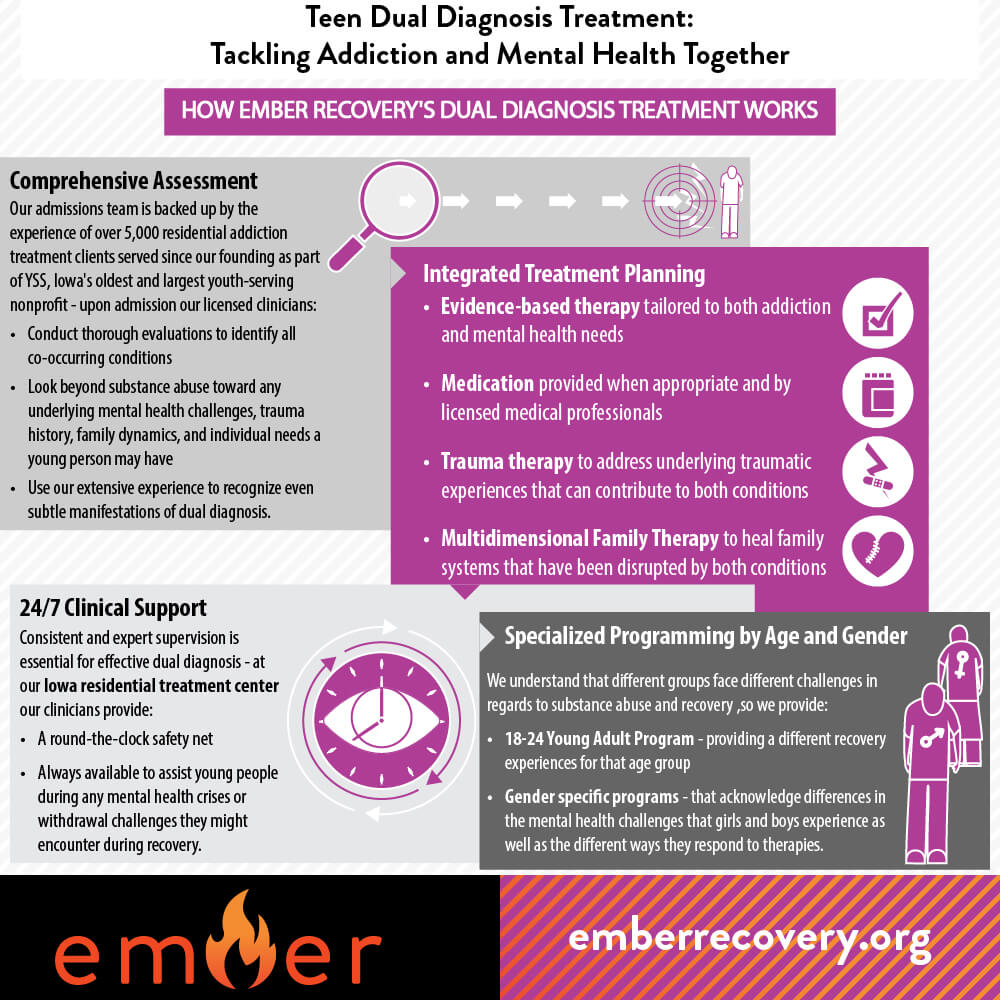
At Ember Recovery’s Cambridge, IA facility, Dual Diagnosis Treatment integrates psychiatric care with evidence-based addiction treatment in a safe, homelike residential environment. Our approach recognizes that healing requires addressing the whole person—not just treating symptoms in isolation.
Comprehensive Assessment
Upon admission, licensed clinicians conduct thorough evaluations to identify all co-occurring conditions. This assessment looks beyond the substance use to understand underlying mental health challenges, trauma history, family dynamics, and individual needs. With over 5,000 residential addiction treatment clients served since our founding as part of YSS, Iowa’s oldest and largest youth-serving nonprofit, our team has the experience to recognize even subtle manifestations of dual diagnosis.
Integrated Treatment Planning
Rather than separate treatment tracks, our Dual Diagnosis Treatment creates one individualized plan that addresses both conditions simultaneously. This might include:
- Evidence-based therapy modalities tailored to both addiction and mental health needs
- Psychiatric medication management, when appropriate, is provided by licensed medical professionals
- Trauma Therapy to address underlying traumatic experiences that often contribute to both conditions.
- Multidimensional Family Therapy to heal family systems disrupted by addiction and mental health challenges.
24/7 Clinical Support
Dual diagnosis requires consistent, expert supervision. At our Iowa residential treatment center, licensed clinicians provide round-the-clock care, ensuring immediate support during mental health crises or withdrawal challenges. This 24/7 supervision creates the safety net young people need to navigate the complex process of recovering from co-occurring disorders Iowa residential treatment center.
Specialized Programming by Age and Gender
Understanding that 18-24-year-olds face different challenges than younger teens, our Young Adult Program provides age-appropriate dual diagnosis care that addresses the unique developmental needs of this transition period. We also offer separate gender-specific programs, recognizing that girls and boys often experience different mental health challenges and respond to different therapeutic approaches.
Supporting Long-Term Recovery
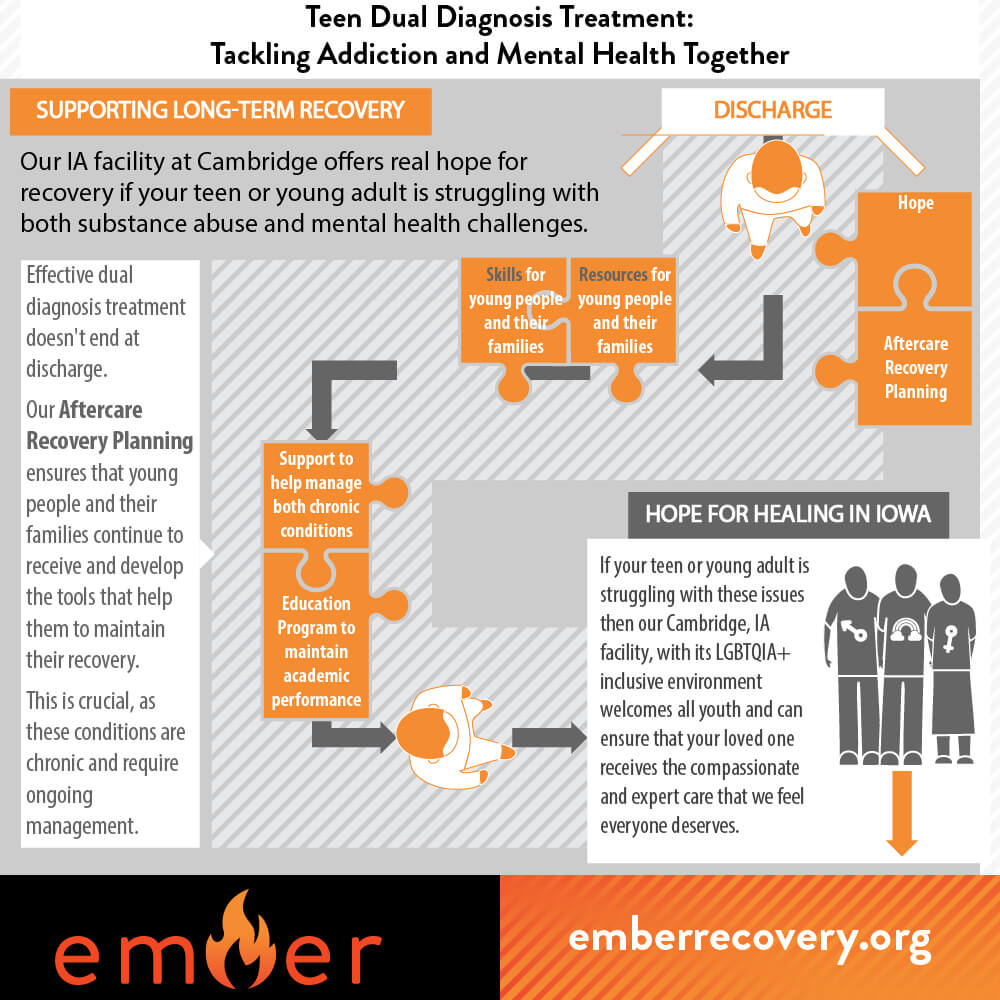
Effective dual diagnosis treatment doesn’t end at discharge. Ember Recovery’s Aftercare Recovery Planning ensures that young people and their families have the resources, skills, and support systems needed to maintain recovery from both addiction and mental health challenges. This continuity of care is essential because both conditions are chronic and require ongoing management.
Our Education Program also ensures that teens and young adults don’t fall behind academically during treatment, reducing the stress and anxiety that often trigger relapse.
Hope for Healing in Iowa
If your teen or young adult is struggling with both substance abuse and mental health challenges, integrated treatment offers real hope for recovery. At our Cambridge, IA facility, healing starts with hope and continues with evidence-based treatment that addresses every aspect of your young person’s well-being. Our LGBTQIA+ inclusive environment welcomes all youth, recognizing that everyone deserves compassionate, expert care.
Recovery from co-occurring disorders is possible when both conditions receive the attention they deserve. Don’t wait for things to get worse. Contact Ember Recovery today to speak with an admissions specialist about how our dual diagnosis program can help your family find the path to lasting recovery.
Sources:
[1] https://nida.nih.gov/research-topics/co-occurring-disorders-health-conditions
[2] https://www.nimh.nih.gov/health/topics/psychotherapies
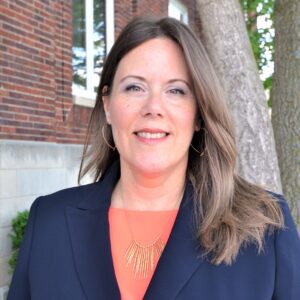
Andrea Dickerson is a Licensed Therapist and Certified Substance Use Counselor who has worked in behavioral health since 1997. Currently, Andrea is the Director of Behavioral Health, overseeing the Ember residential treatment programs and YSS outpatient counseling clinics throughout Central and North Central Iowa. She became a Motivational Interviewing (MI) trainer in 2006 and provides MI trainings throughout Iowa.
Andrea specializes in working with adolescents and their families and enjoys seeing the family relationships grow through therapy. Andrea is also a CARF International Surveyor, going around North America ensuring behavioral health organizations are meeting required standards.
In her free time, Andrea enjoys cheering on the Iowa Hawkeyes and Chicago Cubs, as well as being an active member of Soroptimist International of the Americas (SIA), a global organization that provides women and girls with access to the education and training they need to achieve economic empowerment. She has been a member of the SI of Des Moines club since 2012 and has been actively involved at the regional level, currently serving as Co-Governor of the Peaks to Plains Region.
Through her involvement in SIA, Andrea has been actively involved in the Dream Programs, coordinating annual Dream It, Be It: Career Support for Girls projects, which give girls the tools they need to achieve their education and career goals, empowering them to break cycles of poverty, violence, and abuse.